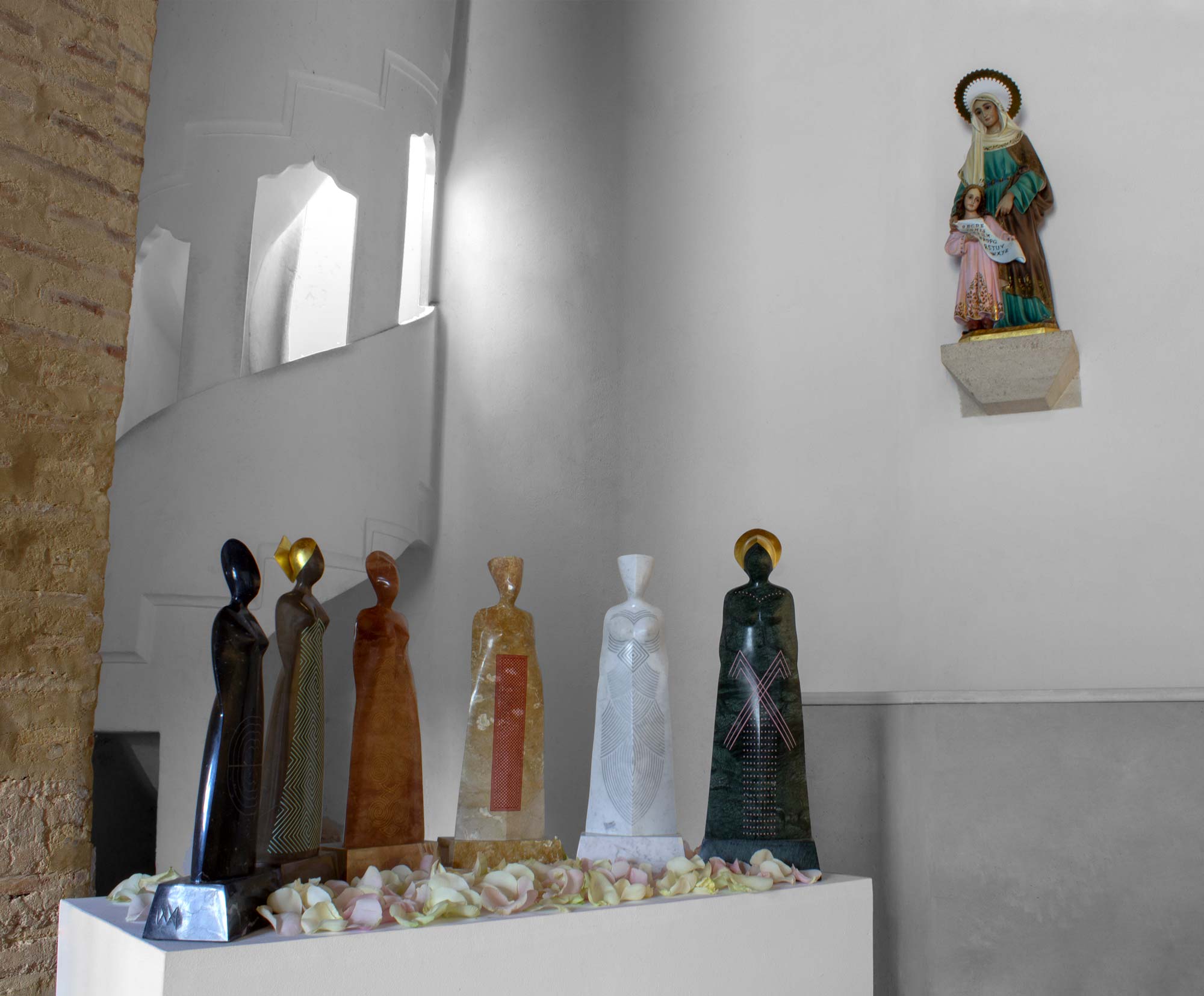
This series of sculptures is inspired by The Language of the Goddess (1989), the landmark work of Lithuanian archaeologist Marija Gimbutas (1921–1994). In this seminal study, Gimbutas examined and classified thousands of archaeological artefacts—including small sculptures and objects made of bone, stone, and clay—from Neolithic sites across Southeastern Europe and the Mediterranean, seeking to identify the meaning of an ancient symbolic language that emerged at the dawn of European agriculture. Drawing upon archaeology, linguistics, ethnography, and comparative mythology, she proposed the reconstruction of a worldview centred on the Divine Feminine, characterised by a profound relationship between humanity and the natural world.
My artistic practice takes this symbolic heritage as its point of departure, without attempting an archaeological reconstruction of the past. Rather, these sculptures constitute an exercise in mythopoietic sculpture: a creative practice that reactivates ancient imaginaries in order to generate new meanings capable of engaging with contemporary debates surrounding feminism, spirituality, and gender equality. Instead of understanding myth as a static relic, I approach it as a living structure that evolves through time and continually opens new possibilities of interpretation.
Each sculpture originates from the reinterpretation of one of the symbols identified by Gimbutas—water, the moon, fertility, regeneration, or the cycles of nature—yet none seeks to reproduce its historical form. Their purpose is to establish a dialogue between archaeology and contemporary creation, between memory and artistic invention, revealing sculpture’s capacity to reactivate ancestral imaginaries and transform them into spaces for critical reflection on the human condition.
From this perspective, art is understood not merely as a means of representation but also as a tool for symbolic transformation. Reinterpreting myths is, at the same time, a way of reimagining the cultural narratives through which we understand ourselves. The persistence of the Divine Feminine therefore lies not in the immutable preservation of its symbols, but in their enduring capacity to be continually reinterpreted in response to the questions and challenges of the present.